.webp) tapversezone.com
tapversezone.comWitch Cabin Cleanup: How to Organize Every Room and Clean More Efficiently

Witch Cabin Cleanup is a cozy organizing simulator built around a deceptively simple objective: restore order to a cluttered witch's cabin by returning thousands of unusual objects to their proper places. Developed and published by Cleanup Crew!, the game features more than 5,300 curios spread across six rooms, including an apothecary, a library, a greenhouse, a ritual chamber, and a familiar's den. Players pick up individual objects, identify where they belong, and place them on the appropriate shelves. There are also upgrades and magical abilities that make the process more convenient. Unlike games that pressure players with countdowns or punishing failure conditions, Witch Cabin Cleanup encourages a relaxed pace and lets players work through the mess at their own speed.
However, cleaning a large virtual space can become surprisingly challenging when objects are scattered across rooms and many shelves look similar. Moving randomly between locations wastes time, while placing items without a clear plan can make it harder to understand what remains unfinished. A more organized approach makes the experience smoother and helps you appreciate the visual transformation as each room becomes tidy.
This guide explains how to approach Witch Cabin Cleanup efficiently, from learning the basic interaction loop and planning your first room to organizing magical objects, using upgrades, and maintaining a satisfying long-term cleaning routine. The goal is not simply to move objects as quickly as possible, but to develop a method that makes every session more manageable and rewarding.
1. Learn the Basic Cleaning Loop Before Tackling the Entire Cabin
The first step in Witch Cabin Cleanup is understanding the relationship between an object, its destination, and the room where it belongs. The core gameplay involves picking up a potion vial, spellbook, jar of moth wings, or another curiosity, identifying its correct location, and placing it on the appropriate shelf. Although this interaction is straightforward, the large number of objects makes observation and organization important parts of the experience.
Instead of attempting to clean every visible surface at once, begin by examining the room and identifying its main storage areas. Look for shelves, racks, tables, and other obvious destinations before collecting objects. Establishing a basic mental map of the environment reduces unnecessary movement because you will have a better idea of where different categories of items should go.
Start with a small, clearly defined area
Choose one shelf or one compact section of a room and work through it systematically. Look at the nearby clutter, identify items that appear to belong in that section, and place them before moving to another area. This approach creates visible progress without requiring you to remember the location of every object in the cabin.
A useful starting routine is:
- Inspect the room before moving objects.
- Identify the shelves and storage areas.
- Pick a small section to organize first.
- Return recognizable objects to their likely destinations.
- Check the cleaned section before moving elsewhere.
- Repeat the process until the room becomes easier to navigate.
This routine also helps you learn how the game communicates correct placement. As you become familiar with the environment, you will spend less time deciding what to do with each item and more time completing the actual cleaning work.
2. Divide the Cabin Into Manageable Cleaning Zones
Witch Cabin Cleanup contains thousands of curios, so treating the entire cabin as one enormous task can make the experience feel unnecessarily complicated. Dividing the environment into smaller zones gives each session a clear objective and makes it easier to see which areas still need attention.
The six-room structure provides a natural starting point. The apothecary, library, greenhouse, ritual chamber, and familiar's den have different themes and storage needs, while the remaining cabin spaces contribute to the larger organizing challenge. Use these room identities to create a practical plan rather than constantly switching between unrelated areas.
Establish a room-by-room order
Begin with whichever room feels easiest to understand. A space with recognizable storage areas may be a better starting point than one filled with unusual objects that are difficult to categorize. Completing a relatively simple area first can help you learn the interaction system before tackling more visually complicated spaces.
Once you select a room, divide it into smaller zones such as a shelf, a table, a storage rack, or a corner containing several related objects. Finish one zone before beginning another whenever possible.
This strategy provides several benefits:
- You always have a clear immediate objective.
- Finished areas are easy to distinguish from unfinished ones.
- You can learn the storage logic of each room gradually.
- You reduce the need to revisit the same locations repeatedly.
- You can stop playing after a meaningful milestone.
Avoid switching rooms too frequently
Moving between rooms can be useful when you discover an object that clearly belongs somewhere else, but constant switching makes the task harder to follow. Try to complete a meaningful portion of your current area before changing destinations.
The best route is not necessarily the shortest physical route. It is the route that helps you remember what you have already organized and what remains unfinished.
3. Identify Objects by Category, Shape, and Purpose
One of the central challenges in Witch Cabin Cleanup is recognizing where unusual curios belong. A magical object may have an obvious destination, but other items can be harder to classify when several shelves contain similar materials or containers.
The game's room themes provide useful clues. Potion ingredients and magical preparations naturally suggest the apothecary, while spellbooks and written materials are associated with the library. Plants and botanical materials suggest the greenhouse, whereas objects connected to ceremonies may fit the ritual chamber. These associations are useful starting points, although you should still check the actual storage arrangement instead of assuming every item follows a predictable rule.
Use visual clues to narrow down destinations
Look at the object's shape, material, color, and apparent function. A bottle may resemble other containers used for magical ingredients, while a bundle of herbs may be easier to recognize as a botanical item. Books, jars, tools, and decorative curios each offer different clues.
Try to answer three questions before carrying an object across the cabin:
- What kind of object is this?
- Which room is most closely associated with it?
- Which shelf or storage area appears appropriate?
This simple process prevents aimless movement. Even when you cannot immediately identify an object's destination, narrowing the possibilities to one room is useful progress.
Learn from repeated object types
As you organize more shelves, you will naturally encounter similar objects. Treat each successful placement as an opportunity to improve your recognition skills. If a particular type of curiosity consistently belongs in one storage area, remember that association for later.
However, do not assume that appearance alone guarantees a destination. Similar objects can serve different purposes, and the game's intended organization may be more specific than a broad category such as bottles or books.
The most efficient approach combines visual recognition with careful observation of the room's storage layout.
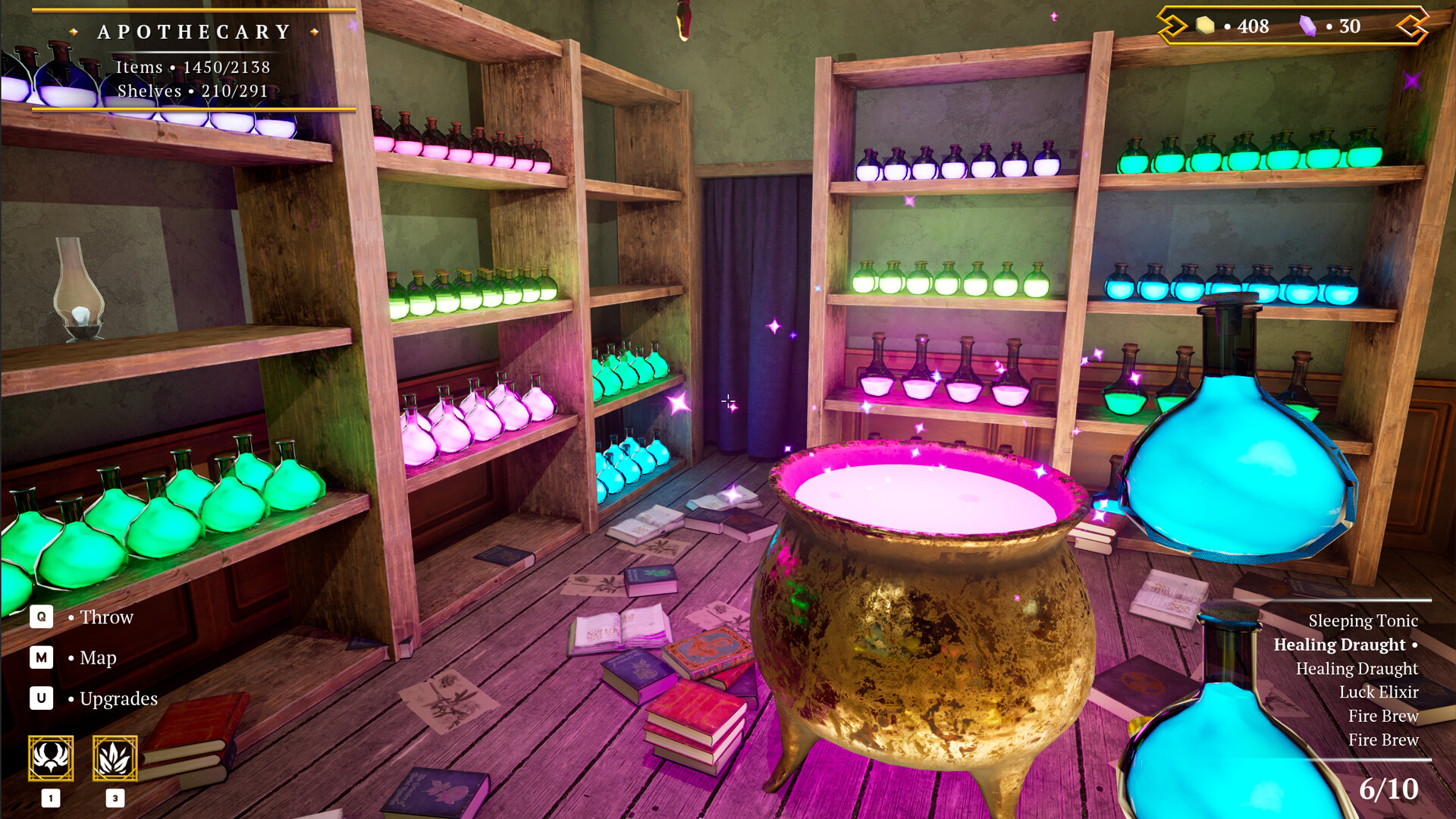
4. Organize the Apothecary Without Mixing Up Magical Supplies
The apothecary is a natural place to practice category-based organization because its theme suggests potions, containers, ingredients, and other materials used in magical preparation. Its shelves may look similar when crowded, so paying attention to the details of each storage area is more useful than simply placing every bottle together.
Begin by examining the shelves and identifying their apparent categories. Look for existing labels, recognizable arrangements, and groups of related items. These details can help you determine whether a shelf is intended for a particular type of container, ingredient, or magical supply.
Work from the clearest categories to the most confusing
Start with objects whose purpose is immediately recognizable. Return those to their appropriate destinations, then reassess the remaining clutter. Removing familiar items can make it easier to notice objects that were previously hidden behind other clutter or visually lost among similar shapes.
A practical order is:
- Identify obvious potion containers.
- Sort recognizable ingredients.
- Examine unusual jars and small curios.
- Match remaining objects to the available storage.
- Recheck the shelves for misplaced items.
This order is a suggested workflow rather than a mandatory in-game sequence. The important principle is to use easy decisions to reduce visual clutter before tackling harder ones.
Keep related objects visually consistent
As the apothecary becomes organized, look at how the shelves appear as a whole. Consistent placement makes it easier to recognize missing objects and identify areas that still need work. If one shelf contains a clear group of similar items, completing that group before moving on can also make the room feel more coherent.
Avoid repeatedly rearranging objects that are already correctly placed unless the game requires a different destination. The purpose of the process is to restore the intended order, not to invent a new storage system for every shelf.
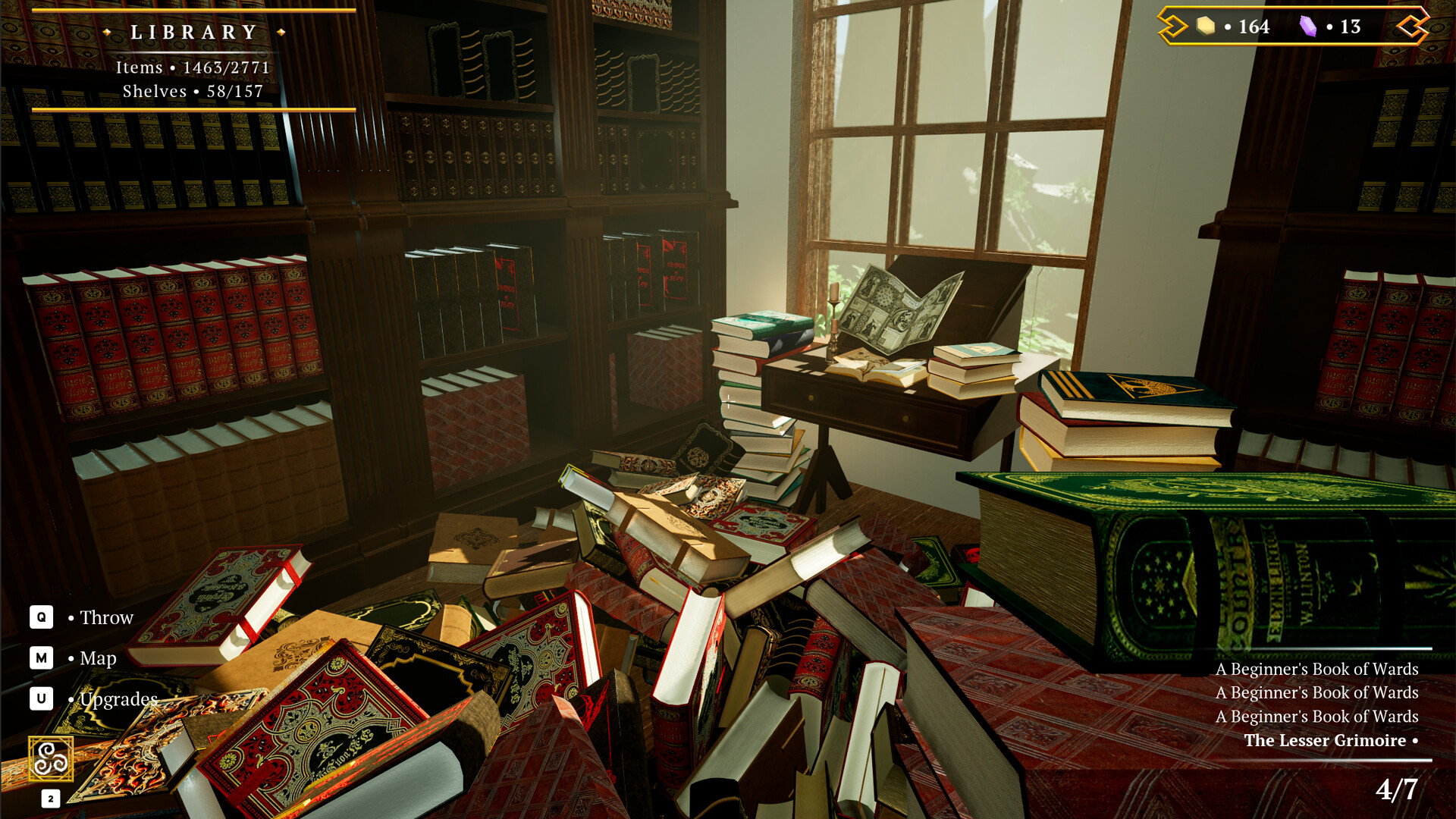
5. Restore Order to the Library and Its Spellbooks
The library introduces a different organizational challenge because books and written materials can share similar shapes while belonging to different categories. When several spellbooks are scattered across a room, it is tempting to gather them all in one place and decide where they belong later. That method may work occasionally, but it can also create unnecessary handling and make the room harder to navigate.
Instead, begin by observing the existing book storage. Pay attention to shelf arrangements and any visible differences between the objects. The library's theme gives you a useful starting point, but the correct destination still depends on the specific storage setup.
Work shelf by shelf
Choose one section of the library and focus on completing it. Identify nearby books and related objects, then compare them with the available shelf space. If an item does not clearly belong in that section, leave it for later rather than making a guess that could lead to extra work.
This method is particularly useful when the library contains multiple storage areas. Completing one shelf at a time creates a clear visual reference, helping you recognize which sections are finished and which ones still contain misplaced items.
Use uncertainty as a reason to inspect, not rush
If two destinations seem equally plausible, take a moment to compare the item with the objects already stored there. Look for differences in shape, color, or apparent function. A few seconds of inspection can be more efficient than repeatedly carrying an item between shelves.
As you learn the library's organization, previously confusing items may become easier to recognize. Your familiarity with the environment will gradually reduce the mental effort required for each placement.
The goal is to make the library predictable: each finished section should help you understand the next one, rather than forcing you to solve the entire room from scratch.
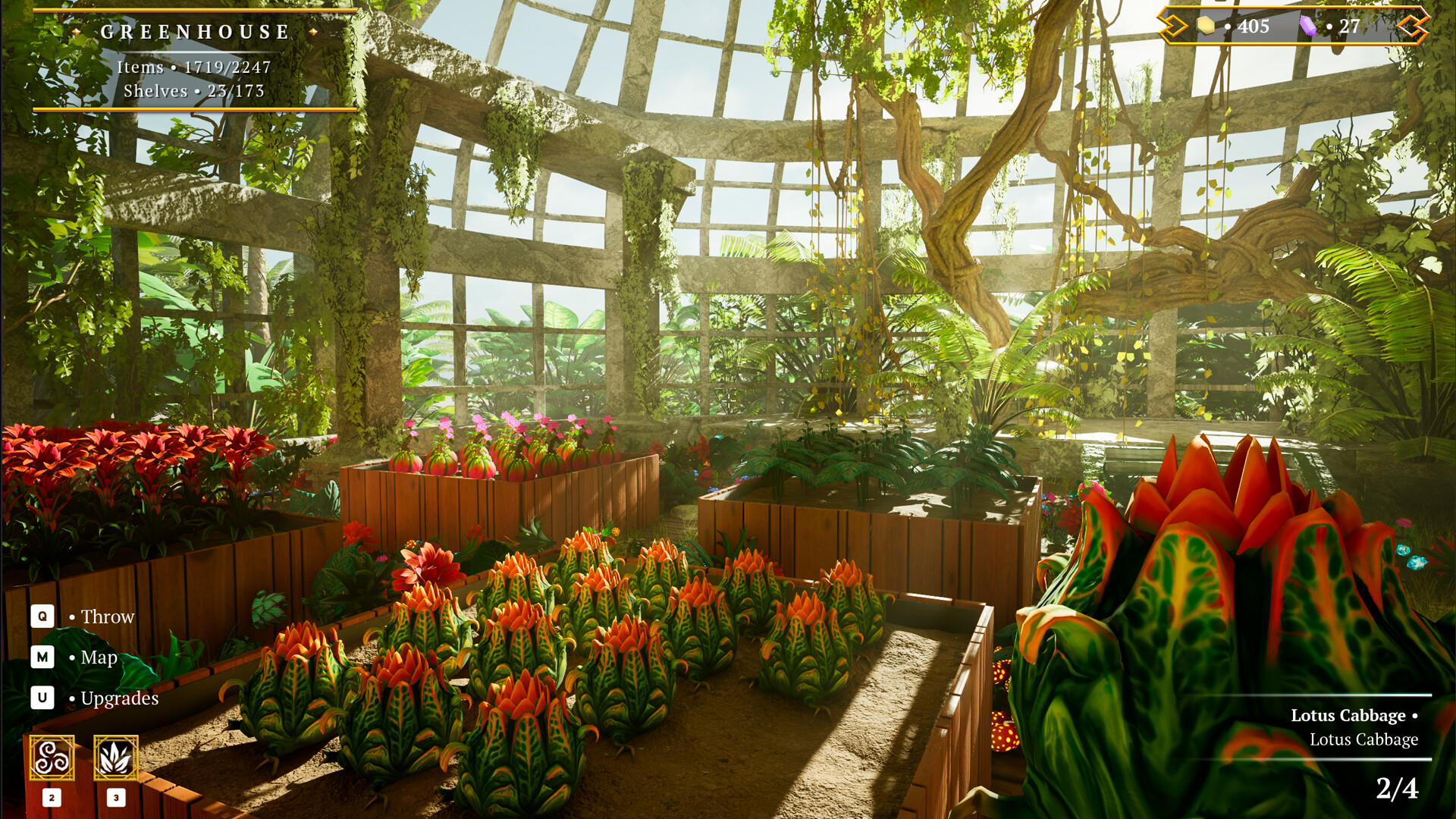
6. Clean the Greenhouse by Following Its Botanical Theme
The greenhouse provides a different visual environment from the library and apothecary. Its botanical theme suggests plants, herbs, and other nature-related curios, making it useful to approach this room by identifying the broad purpose of each storage area before sorting individual items.
Begin with the objects that most clearly resemble botanical supplies. Grouping your attention around recognizable plant-related items can help you understand the intended organization of the room. After completing the obvious categories, examine the remaining curios and compare them with the available storage destinations.
Separate easy decisions from uncertain ones
Do not let one difficult object interrupt the organization of an entire section. If you know where most of the nearby items belong, place those first and return to the uncertain object later.
This approach is particularly helpful when a room contains small objects that are difficult to distinguish at a glance. Reducing the amount of clutter makes the remaining items easier to inspect, and a clearer environment often makes storage patterns more apparent.
A useful greenhouse routine is to:
- Identify obvious plant-related objects.
- Complete one shelf or storage zone.
- Inspect the remaining clutter.
- Reconsider objects that were difficult to classify.
- Check the completed area before moving on.
Preserve a consistent workflow
Once you understand how the greenhouse is arranged, avoid changing your method without a reason. Consistency reduces decision fatigue and makes longer cleaning sessions more comfortable.
The objective is not to finish every botanical object in one uninterrupted burst. It is to create a repeatable process that gradually restores order without making the task feel overwhelming.
7. Tackle the Ritual Chamber and Familiar's Den With More Care
The ritual chamber and familiar's den can feel less straightforward than rooms with easily recognizable categories. Their themes suggest specialized objects, magical equipment, and curios that may not fit into the same obvious groups as books or plants.
When entering these rooms, spend a little more time observing the environment before picking anything up. Identify the storage areas and look for patterns in the objects already placed there. If the room contains several visually distinct groups, use those groups to organize your work rather than trying to solve every item individually.
Treat specialized rooms as classification puzzles
Some objects may be difficult to classify based on appearance alone. In these cases, combine contextual clues with the room's purpose. An object associated with a ritual may fit better in the ritual chamber than in a general storage area, while an item associated with a magical companion may be more appropriate for the familiar's den.
These are practical classification principles, not a guarantee that every object will follow an obvious thematic rule. Check the intended destination carefully and avoid assuming that an item's visual resemblance is enough to determine its placement.
Work in short, deliberate passes
For a confusing room, consider using several passes:
- First pass: Identify obvious objects and destinations.
- Second pass: Place objects that become easier to classify after the initial cleanup.
- Third pass: Review the remaining clutter and inspect uncertain items.
This approach avoids spending too long on one difficult object while leaving an entire room untouched. It also lets you make progress even when the storage logic is not immediately obvious.
As the room becomes clearer, use the newly exposed shelves and surfaces to reassess objects that were previously difficult to see.
8. Unlock Upgrades and Use Magical Abilities to Reduce Repetitive Work
Witch Cabin Cleanup includes progression upgrades that improve movement and interaction, alongside small magical abilities such as a levitation charm and a banishing wand. These features are intended to make organizing the cabin more convenient as you continue playing. The game's official description specifically highlights improvements to movement speed and reach, as well as spells that help with tidying.
Because the core activity involves moving around and handling many objects, upgrades that reduce repeated effort can have a noticeable impact on the overall experience. However, the best upgrade depends on the problem you encounter most often. Faster movement is less useful if your main difficulty is identifying destinations, while improved reach is valuable when you repeatedly struggle to interact with objects in awkward positions.
Match upgrades to your biggest obstacle
Pay attention to which parts of the cleaning process feel most inconvenient. If you spend much of your time walking between shelves, movement improvements may offer the greatest benefit. If you frequently need to position yourself carefully to reach objects, increased reach may be more useful.
Use the following decision guide:
- Too much walking: Prioritize movement-related improvements.
- Objects are awkward to reach: Look for reach-related upgrades.
- Handling clutter feels repetitive: Learn which magical abilities can simplify the process.
- You struggle to identify destinations: Improve your room knowledge before focusing on movement speed.
This is a practical way to think about upgrade priorities rather than a claim about exact upgrade costs or unlock requirements.
Use magic as a tool, not a substitute for organization
The levitation charm and banishing wand are presented as helpful abilities, but their presence does not remove the need to understand where objects belong. Magical assistance is most useful when it supports a clear cleaning plan.
Learn each ability's actual behavior in your current version of the game before building your entire routine around it. Use the available controls and in-game instructions to understand its limitations, then incorporate it into the tasks where it offers a genuine advantage.
The best progression strategy is to combine useful upgrades with a reliable organizational method. Better movement and magical assistance can reduce repetitive effort, while good planning prevents unnecessary work in the first place.
9. Create a Repeatable Routine for Long Cleaning Sessions
With more than 5,300 curios to sort, Witch Cabin Cleanup is a game where consistency matters more than rushing. Even without a timer, long sessions can become tiring if you repeatedly change rooms, forget unfinished areas, or spend too much time deciding what to do next.
A repeatable routine makes it easier to return to the game after a break. Instead of trying to remember every object you handled previously, focus on the room and zone you were working on. A visible, clearly defined objective is much easier to resume than a vague goal such as cleaning the entire cabin.
Use small milestones to track progress
Set goals that can realistically be completed in one session. For example, finish one shelf, organize a corner of a room, or complete a pass through a storage area. These milestones create a sense of achievement and make it easier to decide when to stop.
A practical session structure looks like this:
- Revisit the room you last worked on.
- Identify the most obvious unfinished zone.
- Complete that zone before switching tasks.
- Use upgrades or spells where they genuinely help.
- Review the area for remaining misplaced objects.
- Stop at a natural milestone or continue to the next zone.
Because the game does not impose a conventional countdown, there is little reason to sacrifice comfort for speed. A slower, consistent routine can be more enjoyable than trying to clean as much as possible in a single session.
Take advantage of visible progress
Look at how each completed section changes the room. Neater shelves, organized rows of jars, and clearer surfaces provide immediate feedback that your work is paying off. This visual transformation is part of the game's appeal, so allow yourself to notice it rather than treating every object as a number on a checklist.
If you become tired or start making repeated placement mistakes, switch to an easier section or take a break. Returning with fresh attention often makes classification and organization feel easier.
10. Finish the Cabin With a Careful Review and a Sustainable Strategy
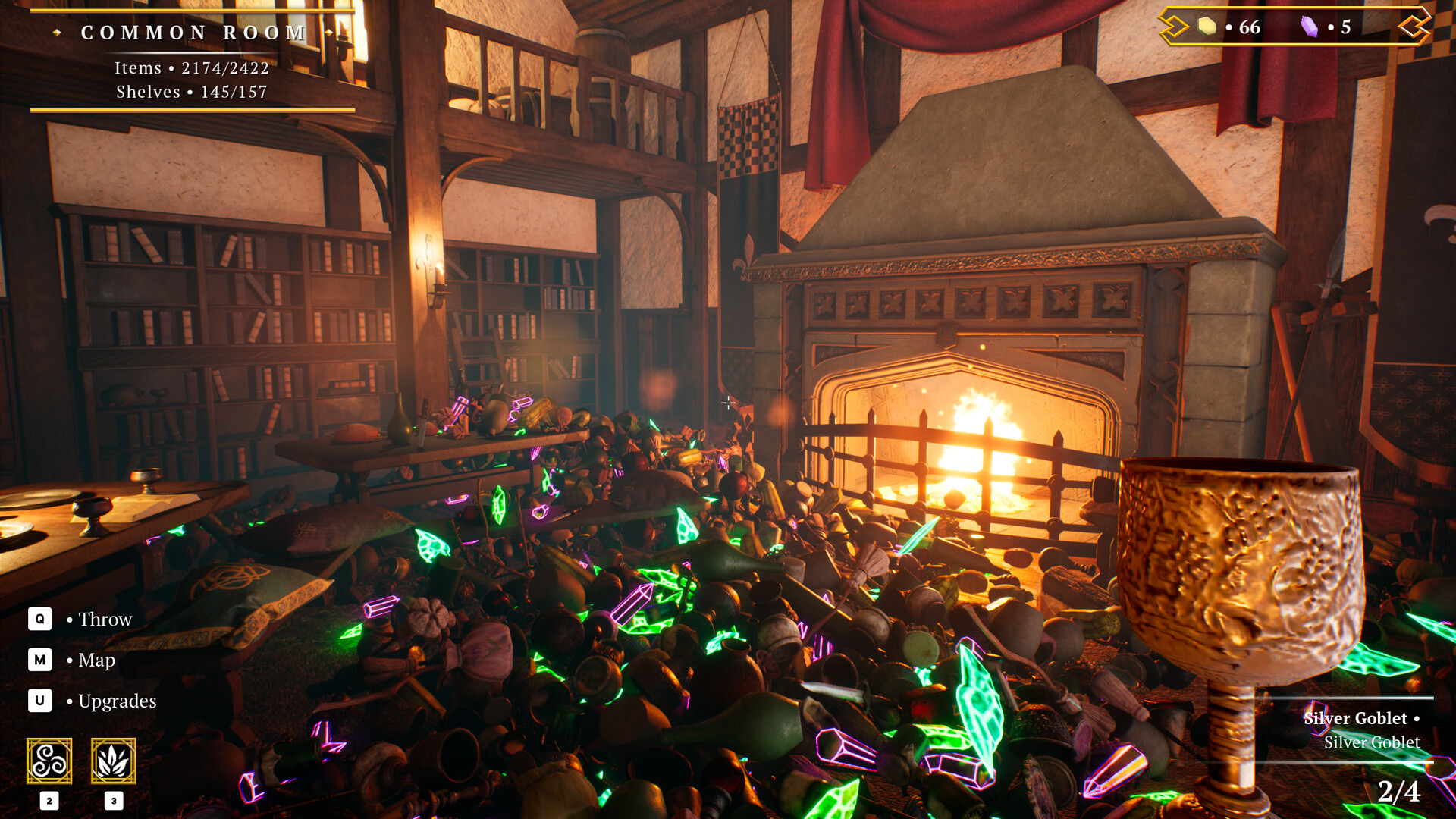
The final stage of a large organizing project is not simply moving the last obvious object. It is reviewing the spaces you have worked on, checking for remaining clutter, and making sure that your overall method has not left small unfinished sections behind.
Witch Cabin Cleanup's scale makes this especially important. When thousands of objects are involved, it is easy to overlook a small curiosity on a shelf or assume that an area is complete because it looks much tidier than before. A final review gives you an opportunity to identify these overlooked details without needing to restart your entire cleaning process.
Perform a room-by-room inspection
Return to each room and examine its major storage areas. Look for objects that remain out of place, cluttered surfaces, and sections that seem less organized than the rest of the environment.
Use a consistent checklist:
- Inspect the main shelves.
- Check tables and other storage surfaces.
- Look for isolated objects that were missed earlier.
- Revisit items whose destinations were uncertain.
- Confirm that each section looks complete before moving on.
If the game provides a completion indicator or other explicit feedback, use it to confirm your progress. Do not assume that a room is officially complete unless the game itself indicates that the relevant objective has been satisfied.
Define completion in a way that keeps the game enjoyable
Some players will want to organize every last curiosity, while others will be satisfied by restoring their favorite rooms or making the cabin look substantially cleaner. Both approaches can be rewarding, depending on what you enjoy about the game.
If your goal is complete organization, keep working through the remaining zones methodically. If you prefer a relaxed experience, use smaller personal milestones and appreciate the visual improvements along the way.
The most effective long-term strategy combines careful observation, room-by-room planning, appropriate upgrades, and a pace that you can maintain. These habits help turn a seemingly endless pile of objects into a sequence of manageable tasks.
Conclusion
Witch Cabin Cleanup is built around a simple but satisfying idea: restore order to a magical home by returning thousands of unusual curios to their proper places. Its large collection of objects and six-room environment can initially feel overwhelming, but the task becomes much easier when you stop treating the cabin as one enormous mess.
Start by learning the basic pickup-and-place interaction, then divide the cabin into rooms and smaller cleaning zones. Use visual clues and room themes to identify destinations, approach the apothecary and library with category-based organization, and take extra care in more specialized spaces such as the ritual chamber and familiar's den. When upgrades and magical abilities become available, choose the ones that address your actual difficulties rather than relying on them to replace a clear plan.
Most importantly, build a routine that suits the game's relaxed design. Complete small areas, review your progress, and return to difficult objects after clearing the surrounding clutter. You do not need to rush through thousands of items to enjoy the experience. By combining careful classification with consistent room-by-room cleaning, you can steadily transform Witch Cabin Cleanup's cluttered cabin into an organized, atmospheric space.