.webp)






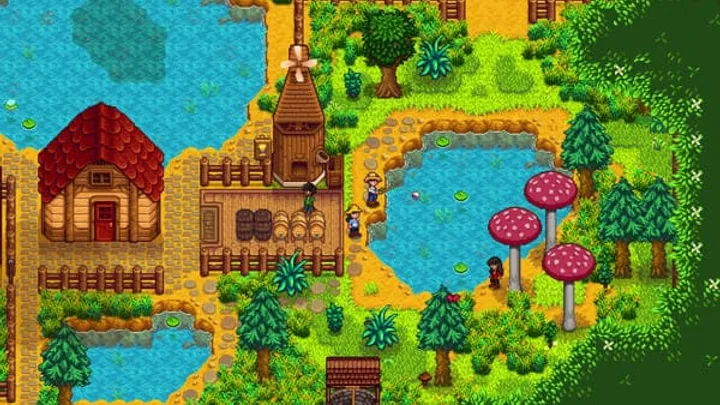
Stardew Valley is often described as a relaxing farming simulation where players grow crops, raise animals, build friendships, and restore the community center. However, one of the deepest systems hidden inside the game is not farming itself but the challenge of transforming a limited piece of land into an efficient and sustainable economic system. The real difficulty begins after the first successful harvest when players must decide how to manage time, energy, resources, and production chains.
The journey from a beginner farmer to a wealthy agricultural owner is not simply about earning more gold. It is about understanding the relationship between seasons, crop value, processing machines, farm layout, and long term planning. This article explores the evolution of a Stardew Valley farm economy and how players gradually move from survival farming to advanced optimization.
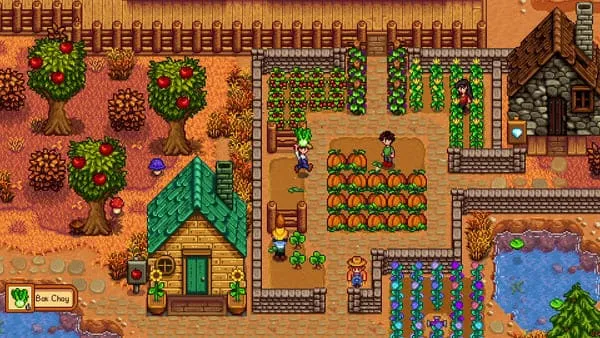
The First Spring The Beginning of Economic Survival
The first season in Stardew Valley creates the foundation for every future decision. New players usually focus on planting as many crops as possible, but this approach quickly reveals the limitations of early game farming. Energy is limited, tools are weak, and every action consumes valuable time.
The struggle between investment and immediate profit
During the first spring, players face a basic economic dilemma. Spending all available money on seeds can create higher future income, but it leaves fewer resources for upgrades and emergencies. The best decisions usually involve balancing short term cash flow with long term growth.
Important early priorities include:
- Buying high value seasonal crops
- Upgrading tools when possible
- Saving resources for future seasons
- Collecting materials for machines and buildings
This stage teaches the fundamental idea that Stardew Valley is not only about farming more but about farming smarter.
The First Summer The Shift From Farming To Production
Summer represents the first major economic transition. Players who only sell raw crops begin to notice that their income has a natural limit. The game introduces a deeper concept through processing machines such as preserves jars and kegs.
Why raw crops are not the final goal
A common mistake is selling every crop immediately. While this creates fast money, processed goods often provide significantly higher value. The player begins to move from being a farmer into becoming a producer.
The production chain concept
A more advanced farm economy follows a structure:
- Grow crops
- Convert crops into artisan goods
- Store products for better timing
- Sell finished goods for maximum profit
This transformation changes the entire meaning of farming in Stardew Valley because the main resource becomes not land but processing capacity.
The First Fall The Discovery Of High Value Crops
Fall is considered one of the most important economic seasons because several crops provide exceptional profit potential. Players begin to understand that different crops have different strategic roles.
Choosing crops based on future goals
A beginner may choose crops only by selling price, but experienced players consider multiple factors:
- Growth time
- Harvest frequency
- Processing value
- Energy efficiency
- Storage potential
This is where Stardew Valley starts to resemble a resource management game rather than a simple farming simulator.
The Second Year The Farm Becomes A Business System
By the second year, the player usually has upgraded tools, expanded buildings, and stronger financial stability. The farm is no longer a small survival project but a complex business system.
Automation and efficiency
The introduction of sprinklers changes the entire gameplay loop. Players no longer spend most of their morning watering crops and can focus on higher level activities.
Efficiency improvements include:
- Automated watering systems
- Large scale crop planning
- Animal product management
- Organized storage systems
The farm begins operating like a machine where every building and tool has a specific economic purpose.
The Role Of Artisan Goods In The Late Game Economy
Artisan goods are one of the most important hidden mechanics in Stardew Valley. They completely change how players evaluate resources because the highest profits usually come from transformation rather than production.
Kegs and preserves jars as economic multipliers
A crop is valuable, but a processed crop can become much more valuable. This creates a multiplier effect where the same land produces greater returns when combined with processing equipment.
The difference between quantity and quality
A large farm with inefficient production may earn less than a smaller farm with optimized processing. The game rewards planning rather than simple expansion.
The Challenge Of Farm Layout Optimization
Farm design is one of the most underestimated challenges in Stardew Valley. A poorly organized farm creates unnecessary movement, wasted time, and reduced productivity.
Designing around daily routines
Advanced players usually organize farms according to workflow:
- Crops near water sources
- Machines grouped together
- Animal areas separated from production zones
- Storage placed near frequently used locations
A good layout reduces wasted actions and creates a smoother daily cycle.
The Economic Impact Of Time Management
Time is the most valuable resource in Stardew Valley. Money can be earned again, but wasted days cannot be recovered. This makes scheduling one of the deepest strategic elements.
Planning each day efficiently
Experienced players divide activities into categories:
- Farm maintenance
- Mining and resource gathering
- Social activities
- Production management
The challenge is not completing every possible action but selecting the actions that create the highest value.
The Psychological Design Behind Stardew Valley Progression
The success of Stardew Valley comes from its ability to create meaningful progress without forcing players into competition. Every upgrade feels connected to personal improvement.
Why gradual growth feels rewarding
The game carefully introduces complexity over time. Players start with simple farming, then discover automation, production, exploration, and optimization naturally.
This structure creates a sense of ownership because every improvement is the result of personal planning.
The Endgame Farm The Transition Into Complete Optimization
The endgame changes the player's motivation. Once money is no longer a problem, the focus shifts from survival to perfection and creativity.
New goals after financial success
- Completing collections
- Creating a perfect farm design
- Maximizing production efficiency
- Exploring hidden mechanics
The game becomes less about earning gold and more about building a personalized virtual world.
The Long Term Meaning Of Farming In Stardew Valley
The farming system in Stardew Valley represents more than agriculture. It is a simulation of growth, decision making, and adaptation. Players learn that success comes from understanding systems rather than simply working harder.
The hidden depth of the game comes from the balance between planning and freedom. A player can create a profitable farm, a beautiful farm, or a relaxing farm, and all approaches remain meaningful.
Why the farm economy remains interesting
The combination of seasons, production chains, and personal choices ensures that each playthrough can develop differently. The real achievement is not reaching the highest income but creating a system that reflects the player's strategy.
Conclusion
Stardew Valley's farming economy is one of the most detailed systems hidden beneath its simple appearance. The journey from planting basic crops to managing a complete production empire shows how the game combines strategy, creativity, and time management. The farm becomes a reflection of the player's decisions, proving that the deepest challenge in Stardew Valley is not collecting wealth but building a sustainable world.